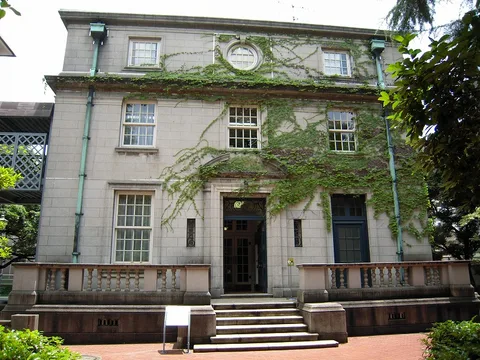
The Kobe Center for Overseas Migration and Cultural Interaction occupies the 1928 National Emigration Center, where about 200,000 Japanese spent their last week in Japan before sailing, mostly to Brazil, until 1971. A second-floor museum tells their story.
Why it's unique
The operator and the city both describe this as the only emigration-related building still standing in Japan. No independent check of "only" was found, so the confidence is moderate.
It is the building itself that counts: you walk the rooms where emigrants were housed and inspected before boarding, including a reconstructed dormitory room with its bunks.
Before you go
It is the setting of Ishikawa Tatsuzō's Sōbō, the first winner of the Akutagawa Prize, which is the context nobody explains on site.
The second-floor museum has a reconstructed emigrants' dormitory room, bunks and all; the medical-inspection procedures on the panels are the bit that stays with people.