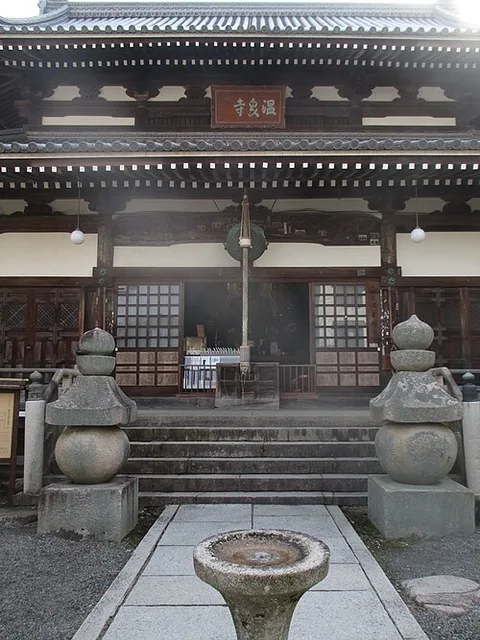
Rokudō-mairi runs from 7 to 10 August at Rokudō Chinnō-ji, the temple at the "crossroads of the six realms". Kyoto families come to buy kōyamaki sprigs, have an ancestor's name written on a wooden water-stupa, and ring the mukae-gane, a bell you cannot see: it hangs inside a walled housing and you sound it by pulling a rope that comes out through a hole in the wall.
Why it's unique
This is a Kyoto Obon custom tied to one temple and one bell, and the city lists it among its annual customs. The bell itself is the point: you never see it, you only hear it answer the rope.
The temple's own legend gives it a long reach. The bell was ordered buried for three years while its founder was in China, was dug up and rung after eighteen months, and was heard in China. Families still use it to call the dead home before Obon.
Before you go
The order matters: buy the kōyamaki at the stalls on the approach first, have the stupa inscribed, ring the bell, purify the stupa in incense smoke, then sprinkle it with water using the wet sprig and leave it before the Jizō. The sprig goes home to sit on the family altar for Obon.
The bell starts at 6:00 and the queue builds from early morning; night stalls line Matsubara-dōri until about 22:00. During the period the hall with Ono no Takamura's well to the underworld is not open; the interior opens only on special-viewing days (¥800). Walk 100 m along Matsubara-dōri afterwards to Minatoya for yūrei kosodate-ame, the "ghost child-rearing candy" from the legend of a dead mother buying sweets for her baby (it has no official site).